Research to article
How to use outrank reddit discussions without copying them
Reddit can reveal the questions people ask in their own words. Use those discussions to choose an angle, then build an original article with independent research. This is a workflow for Outrankai users, not a claim about a Reddit integration or an endorsement from any Reddit community.

One useful question beats a copied thread
Treat a Reddit discussion as a clue to search intent, not as finished article text. These related guides cover the next decisions in a content workflow.
Three research mechanisms—and their limits
Discussion research helps you notice patterns, test an angle, and anticipate objections. None of those steps turns a comment into a verified source.
Repeated questions reveal demand, not volume
Seeing the same concern in several Reddit threads can suggest a useful topic, but a few posts cannot establish how many people search for it or which wording they use elsewhere.
What to do instead
Record the question in plain language, then check search results and your own site data before making it a publishing priority.
Personal accounts are not general evidence
A commenter may accurately describe their experience while leaving out context, location, timing, or an important exception. An article that presents that account as a universal rule can mislead readers.
What to do instead
Verify factual claims against primary documentation or other reliable sources. Attribute personal experiences only when attribution is appropriate.
A draft cannot grant permission to reuse a post
Outrankai cannot make another person's words, screenshots, or identity yours to republish. Paraphrasing too closely can still carry over distinctive language or private details.
What to do instead
Write from your own outline, avoid identifiable anecdotes, and seek permission before reproducing a post or image.
Step-by-step: turn a discussion into an original guide
Keep the research notes separate from the article draft. That small boundary makes it easier to check what came from a discussion and what you have established yourself.
-
1
Collect questions, not passages
Look for public threads relevant to your topic and note recurring questions, points of confusion, and competing answers. Write a short, neutral summary of each theme instead of pasting comments into a prompt. For example, a composting thread might suggest questions about odor, container size, and what can go in the bin.
-
2
Check the answer and choose an angle
Search for reliable guidance on each question before drafting. Compare what people believe with what trustworthy sources actually support, and mark anything unresolved. Choose one reader need for the article: a beginner's explanation, a troubleshooting guide, or a comparison. Trying to answer every comment usually produces a scattered page.
-
3
Draft, edit, and disclose your sources
Give Outrankai the topic, intended reader, verified findings, and questions to address. Ask for an outline first, then review the draft for unsupported statements, copied phrasing, and missing exceptions. Add links to your factual sources where readers can check them. Reddit may have inspired the questions, but the finished guide must stand on its own.
Limits and edges: what changes in the draft
The goal is not to turn a thread into a polished-looking transcript. It is to move from an informal topic signal to an answer with a defined reader, structure, and sources.
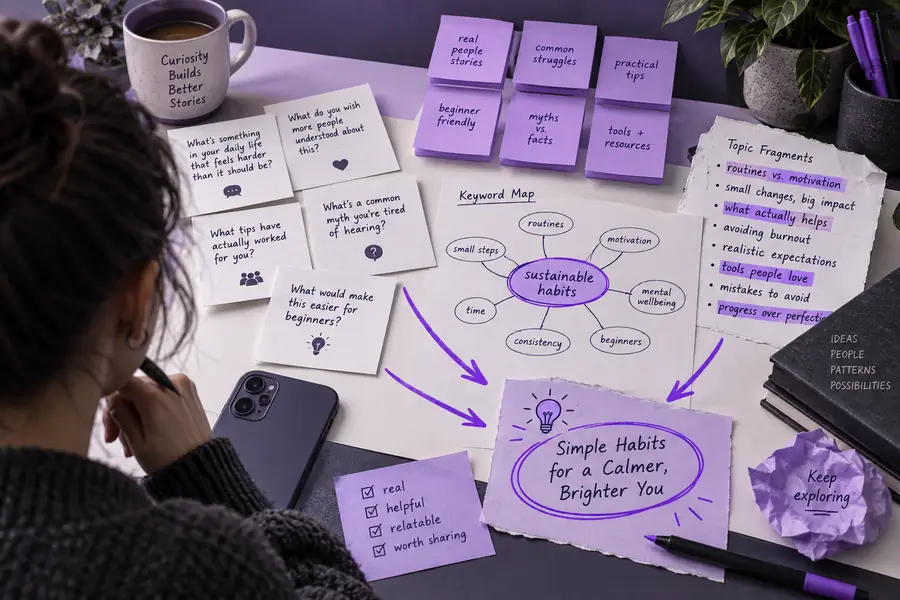

Illustrative content visuals, not Reddit screenshots or a verified before-and-after result. A draft still needs fact-checking and editing.
Research themeOriginal article draftKeep discussion notes and publishable claims distinct
This comparison is a working checklist, not a claim that one source replaces the other. Each side has a different job in the same article.
| Reddit research notes | Outrankai article brief | |
|---|---|---|
| Primary purpose | Spot questions, frustrations, and unfamiliar terminology. | Define the reader, article angle, and answer to deliver. |
| Typical input | Short summaries of themes across relevant public discussions. | A topic, audience, outline request, and checked findings. |
| Treatment of claims | Record what people say without assuming it is correct. | Use claims only after checking them against reliable sources. |
| Use of wording | Note the question without collecting passages to reproduce. | Write original explanations suited to the intended reader. |
| Sensitive details | Avoid retaining usernames and identifying anecdotes unless necessary. | Leave private details out of prompts and published copy. |
| Final quality check | Ask whether the theme appears beyond one unusual thread. | Check accuracy, attribution, clarity, and usefulness before publishing. |
Start with a question worth answering
Take one recurring question, write down what still needs verification, and use Outrankai to shape an original outline. Keep the source checks and final editorial decision in your hands. A useful article should answer the reader clearly even if they have never seen the discussion that inspired it.
Build a brief from your research
- Summarize themes rather than copying comments
- Check factual claims before drafting
- Edit the finished article for accuracy and originality
FAQ: using Reddit discussions for article research
A short summary of the questions and themes is a better starting point than a full thread. It reduces the risk of carrying over someone else's wording, usernames, or personal details. Include independently checked facts in your brief rather than treating comments as evidence.
No. You can read relevant public discussions and write your own research notes before drafting. This guide does not claim that Outrankai connects to Reddit or automatically retrieves posts.
A comment can point you toward a claim that deserves investigation, but it rarely establishes that claim on its own. Check primary documentation or another reliable source before stating a fact. If an individual experience matters to the story, consider whether permission and attribution are needed.
Start from a question written in your own words, make an independent outline, and draft from verified notes. Before publishing, compare the article with the discussion for unusually similar phrases or distinctive anecdotes. Remove or properly handle anything you cannot justify including.
Record the disagreement as a question to resolve, not as two equally established facts. Look for differences in circumstances that might explain the accounts, then check authoritative information. If uncertainty remains, say what is known and where the answer depends on context.